


How Do You Find a Good Barber Near You?

Last Updated: October 27, 2026
Quick Summary
Finding a good barber near you starts with a map search, but the real work is reading listings and portfolios past the star rating. Match the barber's portfolio to your hair type, check consistency across ten to fifteen recent posts, and ask specific questions before you book. A good barber gives specific answers about timing, price, and what they would change about your current cut.
A shop with 300 reviews and a 4.4 shows its real average better than 12 reviews at 4.9.
Look for at least three to five portfolio examples sharing your hair type, density, and length.
Judge cuts at the nape and crown, the transition zone, and the edges.
Ask the price for exactly what you want before you sit in the chair.
Bring two photos: one for the cut you want and one for what you do not want.
Table of Contents
Start With a Map Search, Then Look Past the Stars
Finding a good barber near you starts with a map search, but the real work begins after that. The pin tells you who is close.
Here is the honest problem with how most people find a barber.
Below is a guide to finding a good barber locally: how to read listings, judge portfolios, ask the right questions, and describe the cut you actually want.
What Listings and Reviews Actually Tell You
Listings and reviews tell you two things well: whether a shop is convenient and whether it is consistent. They tell you almost nothing about skill with your specific hair.
A few habits separate smart review reading from lazy review reading:
Read the count, not just the score. A shop with 12 reviews and a 4.9 is a coin flip. A shop with 300 reviews and a 4.4 has shown you its real average.
Filter for your service. A five-star review for a kids' trim says nothing about skin fades. Look for reviews that mention your exact cut.
Watch for patterns, not one-offs. Every shop gets a bad review eventually. Three reviews mentioning rushed fades is a pattern.
If you are weighing whether a higher-priced shop is worth it, consider what matters to you in the service. Our guide to premium vs standard barbershop services explains what to expect from each.
FTC guidance on endorsements and reviews is worth a skim if you want to understand how online reviews are regulated and what fake feedback looks like.
How to Choose a Barber Who Fits Your Hair and Style
Choosing a barber who fits your hair means matching three things: hair type, the style you want, and how the barber works. Skill alone is not enough.
Thick, coarse hair needs a barber who understands weight removal and sectioning. Fine hair needs someone who can build shape without over-cutting.
Ask yourself these questions before you commit:
Does the shop's portfolio show hair like mine?
Do the cuts look consistent, or does the quality swing?
Is the barber's specialty clipper work, scissor work, or both?
If your hair runs thick, our guide to haircuts for men with thick hair covers the styling details worth discussing with your barber before the clippers come out.
Read the Barber Portfolio Before You Sit Down
A barber portfolio is the single best predictor of what you will walk out with, but only if you know how to read it against your own head.

C179E27C C844 4A1B 802B 1A65Edd8Ef7F 1 All 7623
Step 1: Match the portfolio to your hair, not the barber's best work
Before you judge quality, filter for relevance. A portfolio full of tight skin fades on straight, dense hair tells you almost nothing if you have fine hair, a receding hairline, or 3C curls.
A practical shortcut: search the shop's tagged photos or Instagram grid for your hair texture and style keywords ("curly," "long," "thinning," "beard"). If nothing surfaces, ask the shop directly whether the barber has recent examples with your hair type.
Step 2: Judge the cut at the three failure points
Amateur work fails in predictable places. Zoom in on these before you look at the overall shape:
The nape and crown. A fade that looks sharp from the front often breaks down at the back of the head. Look for hard lines, patches, or a visible shelf where the blend should be smooth.
The transition zone. On a fade, the area between the shortest and longest guard should graduate evenly. Look for a dark band or a sudden step, that is a rushed blend.
The edges. Neckline, sideburns, and hairline show attention to detail. A crisp lineup that follows the natural hairline is a good sign; a razor-straight line that ignores growth patterns is not.
Step 3: Check consistency across the grid
One great photo proves nothing. Scan ten to fifteen recent posts and ask: does the quality hold, or does it swing? A grid with varied results may prompt you to ask more questions about the barber's work.
Step 4: Read the photo for honesty
Heavy filters, blur, and dramatic lighting hide bad blends. Natural-light, unfiltered photos, especially ones that show the back of the head, are the most trustworthy. Also check dates: recent work matters more than a greatest-hits post from three years ago, especially if the shop has changed hands or added staff.
Step 5: Compare against your reference photo
Bring the cut you want to the portfolio, not the other way around. Find the closest example in the barber's grid and compare the length on top, the side length, the blend height, and the finish.
You can explore our gallery of men's hairstyles to see the kind of detail we mean.
Here is the five-step method for reading a portfolio before you book.
Step | What to do | What to look for |
1 | Match portfolio to your hair | Three to five examples of your hair type, density, length |
2 | Judge the three failure points | Nape and crown, transition zone, edges |
3 | Check consistency across the grid | Ten to fifteen recent posts; quality holds or swings |
4 | Read the photo for honesty | Natural light, unfiltered, back of head, recent dates |
5 | Compare against your reference photo | Length on top, side length, blend height, finish |
Questions to Ask a Barber Before Your First Cut
The best time to ask questions is before you sit in the chair, and a good barber welcomes them. What separates a useful pre-booking conversation from a wasted one is knowing what a strong answer sounds like versus an evasive one. Use this as a script.
The core questions and what good answers sound like
"How long does a typical appointment take?" A good answer is specific: "Forty-five minutes for a fade and beard, an hour if we do a full consultation." A vague "depends" without a range is a yellow flag, it often means the shop overbooks.
"Do you take walk-ins, or is it appointment only?" Either answer is fine; what matters is whether it matches how you want to book. A shop that says "walk-ins welcome" but has a two-hour wait is telling you something about its scheduling.
"How long should I expect this cut to hold its shape?" A skilled barber will give you a real window, "three to four weeks before the sides lose their shape", and explain what grows out first. A barber who says "it depends" without specifics is guessing.
"What should I use at home to style it?" Good answers name a product type and a technique, not a brand pitch. "A matte clay, worked through damp hair, then a light blow-dry" tells you the barber has thought about your routine.
"Have you worked with my hair type before?" Ask for a recent example, not a yes. "I cut a lot of fine hair, here is a recent one" is the answer you want. A defensive or vague response is a signal.
"What would you change about my current cut?" This is the tell. A barber with real skill will name something specific, "the sides are heavy at the temple, so I would take weight out there", and explain why. A barber who just nods is guessing.
The questions most people forget
"What is the price for exactly what I am asking for?" Ask before the chair, not after. Ask about the price before the chair.
"Do you do a consultation before the first cut?" Ask whether a consultation is available and whether it is included or added to the appointment.
"Who in the shop would you recommend for my hair type?" If you are booking at a multi-barber shop, this question routes you to the right chair instead of the next available one.
How to read the answers
Watch for pace and specificity. A barber who rushes you past your questions may not be a good fit for you. A barber who asks you a question back, about your routine, your last cut, what you did not like, is discussing your preferences. If the answers are vague, defensive, or dismissive, treat that as data and keep looking.
How to Describe a Haircut to a Barber So You Get What You Want
Describing a haircut well comes down to four details: the length on top, the length on the sides, the blend, and the finish. Skip any one of those and you leave the result to chance.
Use this checklist before your appointment:
Top length: Bring a photo and point to the exact length you want.
Sides: Name the guard number or say "scissor only."
Fade: Say where it starts (low, mid, high) and how tight you want it.
Blend: Ask for a skin fade, a taper, or a soft blend.
The "what I don't want" photo is the one most people skip. It is also the most useful.
Check Hygiene, Licensing, and Shop Standards
Hygiene and licensing are non-negotiable.
Licensing requirements vary by state, so check your state's board of barbering or cosmetology for current rules rather than assuming.
State barber licensing and regulation resources can point you toward the right state board.
What to look for on arrival:
Fresh neck strips and clean capes for each client
Clippers and scissors sanitized between cuts
A clean sink and fresh towels
Barbers washing hands between clients
Book Your First Appointment at Rusty Blade Barber
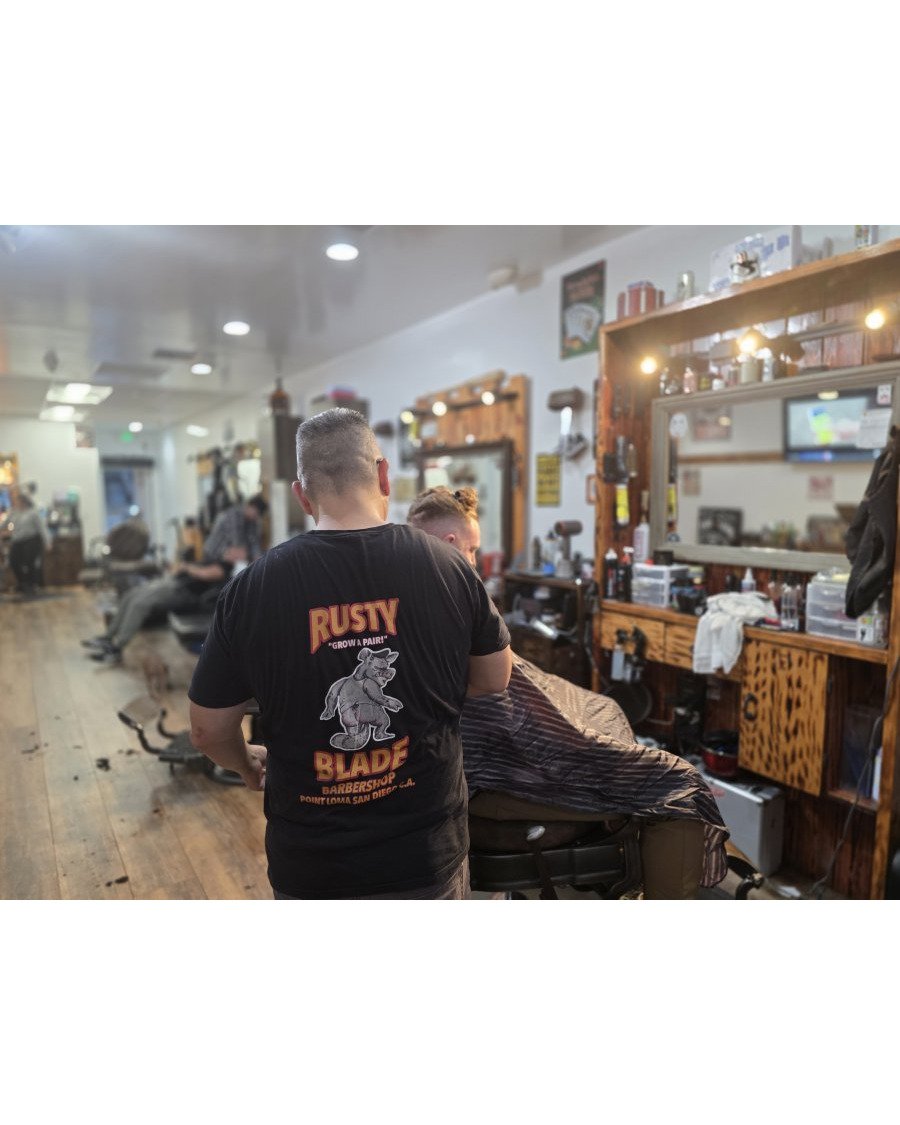
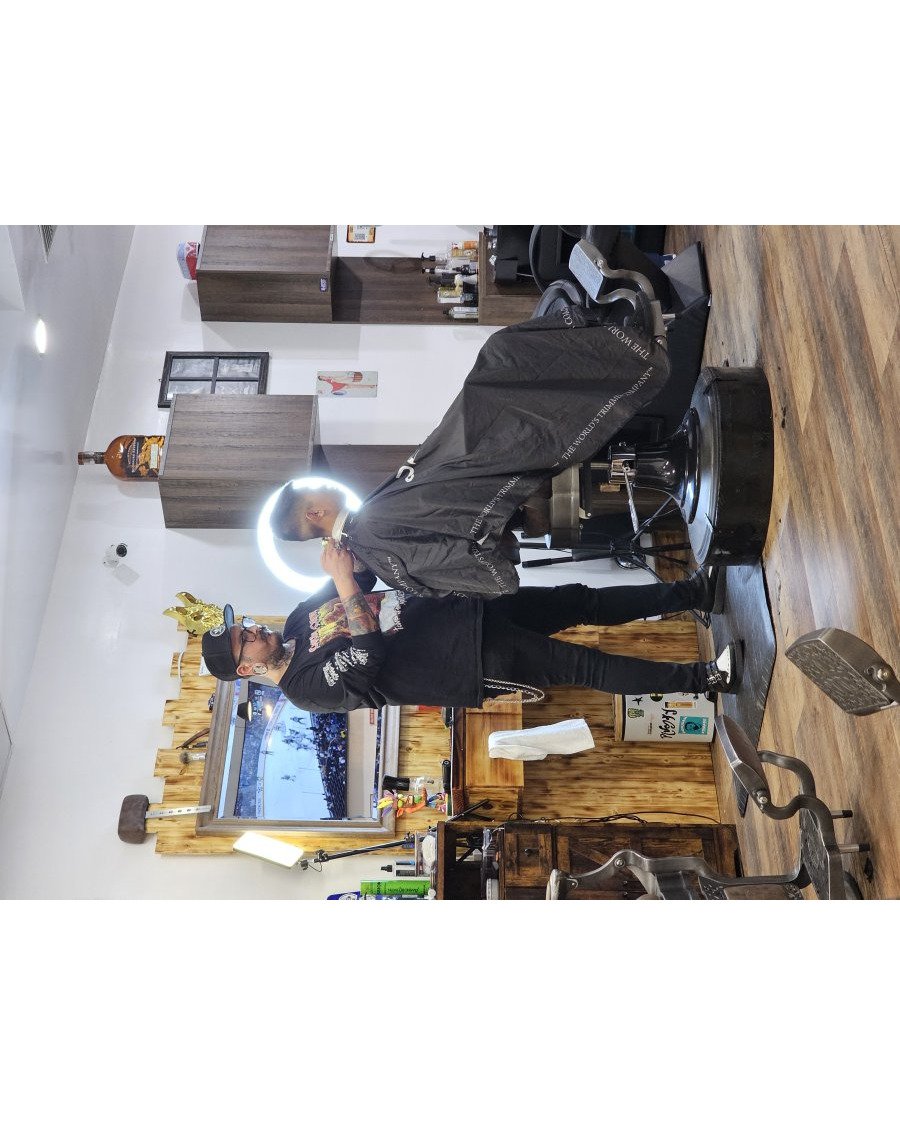
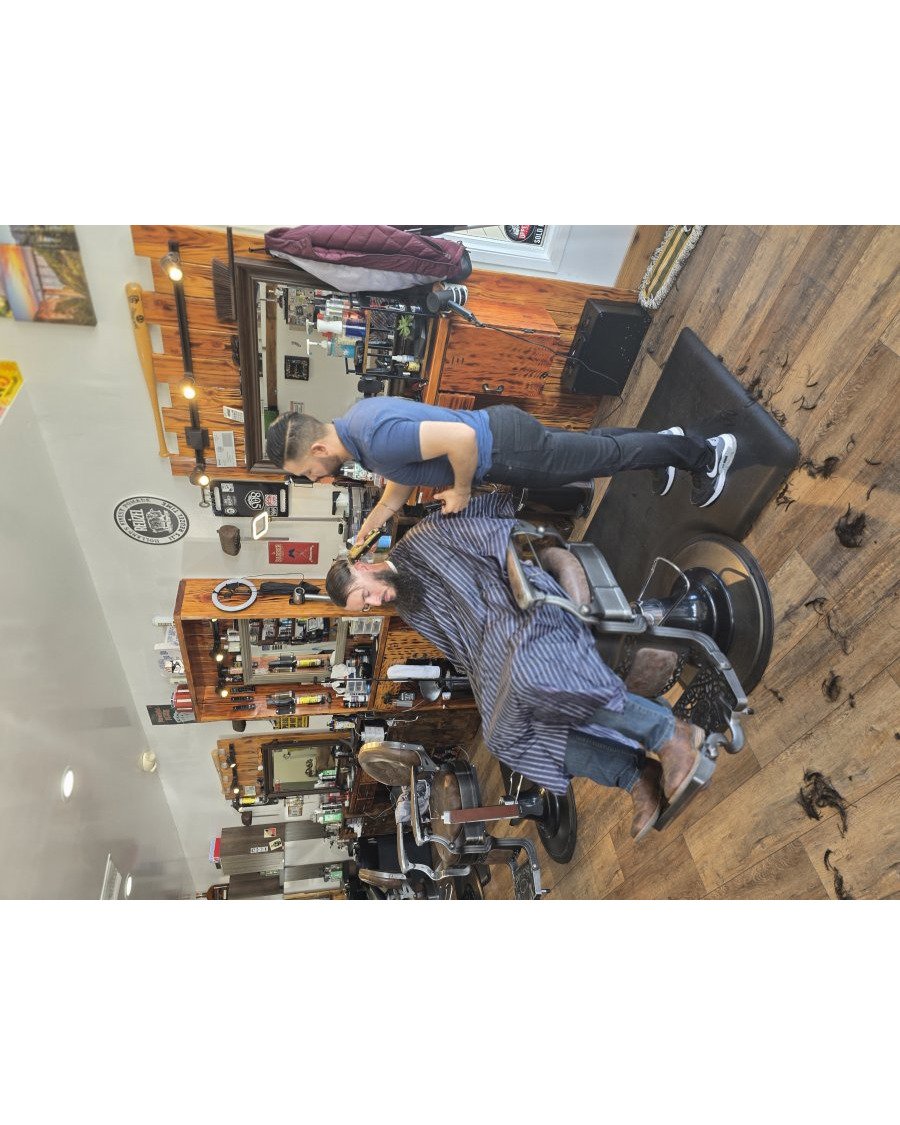
Rusty Blade Barber offers a private, vintage-inspired space with precision cuts, hot towel shaves, and skin fades in a relaxed, friendly environment. You can browse the full service menu to see every option before you book.
Here is a way to put the process to work: Rusty Blade Barber has the location, hours, and booking details you need to make your appointment.
Search your neighborhood and shortlist three shops.
Read reviews for count and pattern, not just stars.
Study each portfolio for your hair type.
Ask the six questions above before booking.
Frequently Asked Questions
How can you tell if a barber is good before you book?
Start with their portfolio. Review available photos and feedback, and ask questions about the services and booking details that matter to you.
What questions should I ask a barber before getting a haircut?
Ask about the barber's experience with your hair type or style, the techniques they use, pricing, appointment length, and whether a consultation is available. If you have sensitive skin, discuss your concerns before a hot towel shave.
How do I describe the haircut I want so the barber gets it right?
Bring photos, ideally two or three from different angles, and point out exactly what you like in each one. Describe the length on top, the fade level on the sides, and how you want the neckline and sideburns finished. Mention how you style your hair at home and how often you plan to come back. If you are unsure of the terminology, ask the barber to repeat back what they heard before they start cutting.
Should I book a consultation before my first haircut at a new shop?
Ask the shop whether a consultation is available before your first haircut.
Finding a good barber locally is not about luck. It is about reading the signals most people ignore: review patterns, portfolio detail, the questions a barber asks back, and the standards a shop keeps without being told. Rusty Blade Barber was built for men who want that level of care, with a private setting, traditional techniques, and a blend of old-school craft and modern style. Get started with Rusty Blade Barber and book a cut that holds its shape past the first week.
Comments