


How to Choose a Hairstyle for Thick Hair as a Man

Quick Summary
The best hairstyles for thick hair men are short fades, textured crops, layered medium cuts and textured sweeps, since removing weight inside the cut keeps dense hair from looking heavy or wide. Choose a style based on how much time you want to spend styling and the length you want.
Thick hair spreads outward, so cutting bulk at the sides and back keeps the head shape balanced.
A textured crop or short fade suits thick hair because it breaks up density and needs little styling.
Layered medium cuts lift the crown and prevent heavy, curtain-like shapes on longer hair.
Longer thick-haired styles need trims roughly every three to four weeks to stay sharp.
Bring reference photos and specify how much length to leave on top and at the sides.
Table of Contents
Why Thick Hair Needs a Different Approach
Last Updated: November 19, 2026

Thick hair is one of the best hands to be dealt, but it changes how every haircut behaves.
Hair thickness is mostly about how many strands grow per square inch of scalp and how wide each strand is.
Most of the common problems with thick hair come down to three things:
Bulk at the sides and back: Thick hair spreads outward, so a cut that leaves too much length there can make your head look wider.
Weight on top: Heavy hair can collapse or flatten, especially when it is left long without layers.
Stubborn growth direction: Cowlicks and whorls push hair in odd directions, and dense hair magnifies them.
A good barber manages these issues with removal, texturizing, and deliberate layering. Taking weight out inside the cut keeps the outside looking clean without making the hair thin or patchy.
When you sit down for a cut, a few questions help set expectations:
How much time do you want to spend styling each morning?
Do you want the hair to lie flat, stand up, or fall naturally?
Are you aiming for short, medium, or long lengths?
Answering those three questions gives your barber a clear starting point. The sections below walk through the main styles that tend to work well on thick hair, starting with short cuts and moving toward longer options.
Hairstyles for Thick Hair Men: Short, Medium and Long Options
The right length depends on how much volume you have and how much time you want to spend on your hair. Short cuts are usually the easiest to control, while longer styles give texture and room to play with shape.
Short styles keep bulk under control with the least effort. Medium styles offer more flexibility for texture and sweep. Longer cuts can look impressive, but they need layering and regular trims to avoid heaviness.
Fades, Crops and Crew Cuts for Short Thick Hair
Short cuts are a strong choice for men with thick hair because they reduce weight and make the head shape easier to read. The main options are fades, textured crops, and crew cuts.
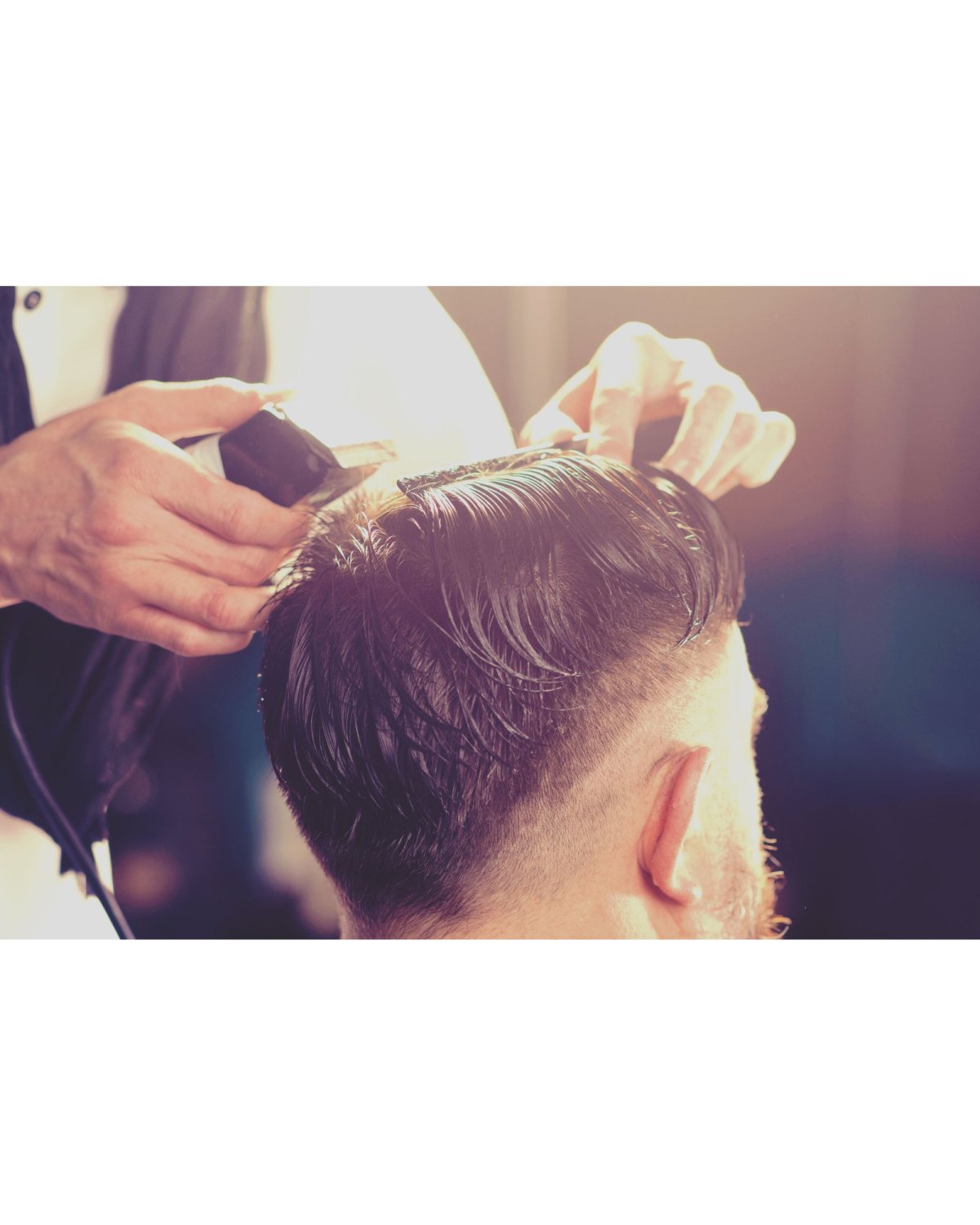
Low, mid, or high fades: A fade blends the sides into the back and removes bulk where thick hair tends to flare out. A high fade gives a sharper, more defined look, while a low fade is more conservative.
Textured crop: The top is cut slightly longer and cut with texture, and the sides are tapered. This suits thick hair well because the texture breaks up density rather than leaving it as a solid mass.
Crew cut: A crew cut keeps the top short and uniform, with clean sides. It is low-maintenance and handles thick hair by keeping the overall profile tidy.
A common mistake is asking for a fade without specifying how much length to leave on top. Tell your barber how you want the top to look, and bring a reference photo if you can.
Medium and Long Styles That Control Volume
Medium and long styles can look excellent on thick hair when the cut is built around layers.
Layered medium cut: Shorter layers around the crown lift the hair, while longer layers at the sides and back keep the shape balanced.
Textured sweep: Length on top is swept back or to one side and cut with texture to reduce bulk, giving a clean and modern look.
Long, layered style: For longer hair, internal layering removes weight from underneath so the hair moves rather than hanging like a curtain.
Longer styles also need more attention to maintenance. Thick hair dries slowly, and long lengths can look messy within a few weeks if they are not trimmed.
The table below summarises the main short, medium and long options for thick hair and what each one is best for.
Style | Best for | Key difference |
Low, mid or high fade | Removing bulk at the sides and back | High fade is sharper; low fade is more conservative |
Textured crop | Breaking up dense hair | Top is longer and textured; sides are tapered |
Crew cut | Low-maintenance, tidy profile | Short, uniform top with clean sides |
Layered medium cut | Lifting hair and balancing shape | Short crown layers; longer sides and back |
Textured sweep | Modern, clean look | Length swept back or to one side, cut with texture |
Long layered style | Movement instead of a heavy curtain | Internal layers remove weight from underneath |
Low-Maintenance Haircuts for Thick Hair Male Clients
If you want a haircut that needs little daily effort, focus on styles that stay in shape without much product.
The best low-maintenance options are:
Short textured cut: Minimal styling is required, and the texture gives natural movement.
Classic taper: The sides are tapered neatly into the back, and the top is left slightly longer for flexibility.
Buzz cut with a blended edge: Very short all over, with soft blending around the neckline and ears.
Low-maintenance does not mean no maintenance. Even the simplest cut needs regular visits to keep the outline crisp. A trim every three to four weeks is a common rhythm for short styles on thick hair.
Many barbers also recommend asking for a cut that works with your natural growth pattern.
Straight Thick Hair Haircuts Male: What Works and Why
Straight thick hair has its own challenges. It tends to look heavy, and it can separate into distinct sections rather than blending together.
Good options for straight thick hair include:
Undercut: The sides and back are cut short while the top stays longer. The contrast works well because the short sections remove bulk exactly where straight hair tends to spread.
Side-swept layers: Layers are cut through the top and swept to one side, which breaks up the straight lines and adds movement.
Scissor-cut crop: Scissor work on top gives softer texture than clipper work, which suits straight hair that resists shaping.
Straight hair often looks flat when it is cut too evenly. Ask your barber to add internal layers or point-cutting to create movement.
For styling, straight thick hair responds well to a light product that adds grip without heaviness.
Medium Long Hairstyles for Men With Thick Hair
Medium-long hair is one of the most versatile lengths for thick hair because it has enough length to show texture while staying manageable. The key is to keep the cut layered so the top does not become too heavy.

Popular medium-long options include:
Shaggy layers: Heavily layered hair with a relaxed, tousled look. This is a good fit for thick hair because the layers reduce density.
Slicked-back medium cut: Hair is left long enough to comb back, with the sides tapered so the head shape stays balanced.
Textured quiff: Length on top is lifted and shaped with product, while the sides are kept shorter for contrast.
Medium-long styles need more regular trimming than short cuts. Regular visits will keep the layers fresh and prevent the ends from looking ragged.
Haircuts for Men With Thick Hair and a Round Face
Face shape matters as much as hair thickness. A round face benefits from styles that add height and length, which visually lengthen the face and balance its width.
The mechanism is simple: vertical lines and volume on top draw the eye upward, while horizontal volume at the sides draws the eye outward.
Cuts that tend to work well with a round face include:
Volume on top with tapered sides: Lifting the top draws the eye upward, while tapered sides keep the width under control. A textured quiff or a short, textured crop with a mid fade is a reliable combination.
Longer textured top: Length on top adds vertical lines to the face. Keep the sides short enough that the top is clearly the longest part of the cut.
Asymmetric side-swept style: A sweep to one side creates a diagonal line that softens the roundness. Ask for the part to sit off-center rather than in the middle.
Avoid cuts that add width at the sides, such as a full, rounded fade combined with a short top. This can make the face look wider.
Quick guidance for other face shapes
The same logic applies across face shapes, and thick hair gives you more material to work with than most men have.
Square face: The jaw is already strong, so you can carry a shorter top and a cleaner fade. A crew cut or a short textured crop with a high fade works well because it does not compete with the jawline.
Oval face: Most cuts work, but thick hair can make an oval face look top-heavy if the sides are left too long. A mid fade with a textured top keeps the balance.
Long face: Avoid too much height on top. A side-swept style or a medium-length layered cut with more width at the sides balances a longer face better than a tall quiff.
What to tell your barber about face shape
You do not need to diagnose your own face shape precisely. A useful approach is to point out what you want to change: "I want my face to look longer," or "I want to keep width off the sides." A barber who cuts thick hair regularly will translate that into a shape.
Watch out: a reference photo taken on a man with fine hair can mislead you. The same cut on thick hair will sit wider and heavier, so ask your barber to adapt the proportions rather than copy the photo exactly.
Booking Your Thick-Hair Cut at Rusty Blade Barber
Choosing the right style is only part of getting a good result. The barber's technique and how well they understand your hair all shape the final look.
If you are ready to book, book a classic haircut and beard trim with Joe for a clean, detailed finish. If you are still comparing styles, browse our full men's haircut and grooming services in San Diego to see what is available. When you know the length and style you want, schedule a men's haircut and beard trim for precision work with beard shaping included.
For more ideas before your visit, read our guide to the best men's haircut styles in San Diego. If you also struggle with irritation after shaving, learn how to prevent razor burn in seven steps to keep your skin calm between cuts.
Bring a few reference photos to your appointment, and be specific about how much length you want on top and at the sides. A short conversation before the cut makes a big difference.
Frequently Asked Questions
What haircut is best for thick hair men?
There is no single best cut, but textured crops, short fades with some length on top, and medium layered styles tend to work well with thick hair men because they remove bulk and give the hair a shape it can hold. Thick hair often pushes out at the sides and expands with humidity, so a barber who removes weight through the interior and blends the sides usually gets the best result. Bring a reference photo to your appointment, and ask the barber whether your hair density suits the length you have in mind before the first cut.
What does the 3:2:1 haircut rule mean?
The 3:2:1 rule is a common barber guideline for thick hair that describes how much length to remove as you move from the top of the head down to the sides and back. The idea is that thicker hair needs more weight removed from the lower sections so the cut does not flare out. Barbers use it as a starting point rather than a strict formula, adjusting for hair texture, growth pattern and the look you want, so ask your barber how they apply it to your head.
Which low-maintenance haircuts work best for men with thick hair?
Short cuts with tapered or faded sides, such as a low taper with a textured crop on top, are the most low-maintenance options for thick hair men. They need a trim roughly every three to four weeks to keep the outline sharp, and they dry quickly with little styling. A small amount of hair clay or cream is usually enough to hold the top in place. Avoid very long layers on thick hair if you want minimal upkeep, since they tend to lose shape within a few weeks.
Comments